FAA network outage halts US air traffic as AI-era breakdowns pile up
An FAA network failure stopped US air traffic for hours on Friday, and the same bad code hit nearly 200 organizations through bank websites — as Anthropic nears a record IPO.
Why it matters
- The FAA's entire network went offline for hours on Friday, halting US air traffic completely.
- Malicious code inserted via a third party infected HSBC's and Associated Bank's websites and reportedly reached nearly 200 organizations.
- JPMorganChase reported slow transaction processing on Monday due to a technical issue.
- Microsoft, United Airlines and the NSA also suffered breakdowns over the past week.
- Anthropic is preparing an IPO expected to be the largest in corporate history.
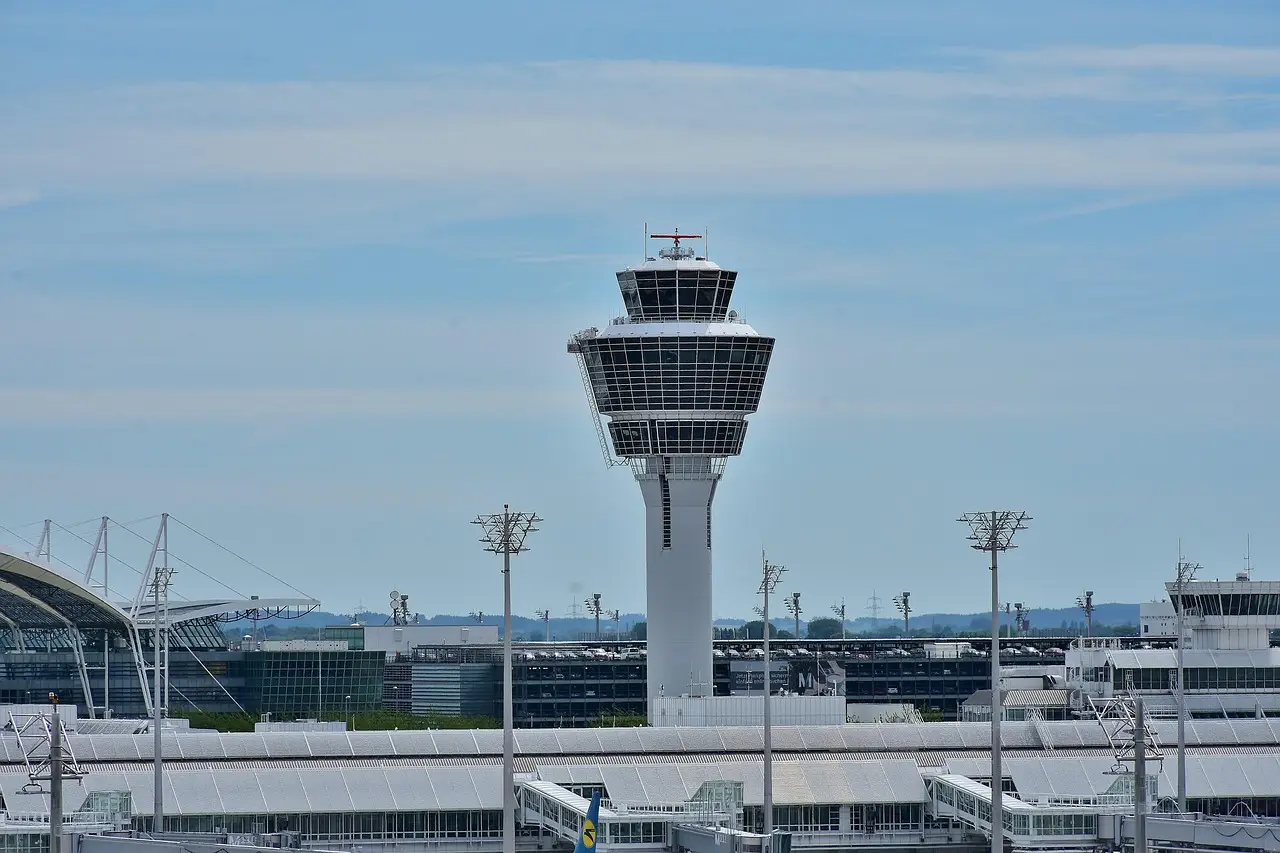
The Federal Aviation Administration's entire network went down on Friday and stayed offline for hours, bringing the nation's air traffic to a complete stop — one of a string of breakdowns this past week that also hit Microsoft, United Airlines, the NSA and several major banks.
The timing carries an uncomfortable symmetry. Anthropic, one of the leading AI companies, is about to conduct its first public offering of stock, in what is expected to be the largest IPO in corporate history. Meanwhile, as the source report puts it, the products that Anthropic and its competitors build and sell "appear to be wreaking havoc with, well, everything, leaving people to try and kitbash together solutions."
That is a strong claim. It deserves a careful look at what the report actually documents, what it attributes, and what it leaves unsaid.
What actually broke, and when?
The report describes a cluster of failures across the past week. The concrete events it names are:
- The FAA: On Friday, the agency's entire network broke and was offline for hours. The nation's air traffic ground to a complete stop as a result.
- HSBC and Associated Bank: On Monday, both banks reported that malicious code had slipped onto their public websites through a third party.
- The scale of that compromise: The same bad code had reportedly infected nearly 200 other organizations.
- JPMorganChase: Also on Monday, the bank said a technical issue was causing some transactions to take longer than usual to process.
- Microsoft, United Airlines, the NSA: These organizations experienced what the report calls "a whole spate of breakdowns" over the same period, though the report does not detail the nature of each incident.
The FAA failure is the hardest fact in the story and the one with the clearest stakes. A hours-long, network-wide outage that stops all air traffic nationally is not a routine glitch. It is a single point of failure visible to millions of travelers in real time.
The banking incidents are quieter but potentially broader. Malicious code distributed through a third party — a supply-chain vector, meaning attackers compromised a shared external component rather than the banks directly — reached roughly 200 organizations by the report's count. The word "reportedly" matters here: the figure is attributed, not independently confirmed in the piece.
JPMorganChase's issue, by contrast, is described as a technical problem, not malicious activity. Slow transactions are an inconvenience, not a breach. Lumping these incidents together is convenient for narrative purposes, but readers should keep the distinctions in mind.
Why does the report connect this to AI?
The report's framing is explicitly ironic. Anthropic, a company whose chatbot Claude competes with OpenAI's ChatGPT and Google's Gemini, is preparing an IPO expected to be the largest in corporate history. That superlative is the report's own characterization of expectations, not a filed figure, and no valuation, share price or date appears in the text.
Against that backdrop, the report argues that the AI industry's products are contributing to systemic fragility, while the people affected improvise fixes. The phrase "kitbash together solutions" — borrowed from model-building slang for assembling something from mismatched parts — captures a mood of improvised remediation rather than engineered recovery.
The skeptical reading is warranted on at least two counts.
First, the report does not specify a causal mechanism for any of the outages. It does not say AI code generated the malicious script on the banks' websites. It does not say an AI system caused the FAA network failure. It asserts a pattern of havoc and juxtaposes it with Anthropic's IPO, leaving the inference to the reader. Correlation across one week of news is not causation, and the piece stops short of claiming it.
Second, the weakness of supply-chain compromises at banks is old news in security terms. Third-party scripts poisoning public websites is a documented attack class that predates the current AI boom by years. If AI is the accelerant, the report does not show the fire starting.
What the report does establish is a climate question: whether institutions are deploying AI faster than they can secure the systems around it. That question does not require a smoking gun to be worth asking.
What is not said?
Several gaps stand out. The report offers no dollar figures for the losses from the FAA stoppage or the banking incidents. It names no individuals, quotes no officials, and cites no investigators. The "nearly 200 other organizations" infected by the same code go unnamed. The nature of the Microsoft, United Airlines and NSA breakdowns is not described at all — they function as atmosphere rather than evidence.
The Anthropic IPO, likewise, appears without a date, an expected valuation or a named exchange. "Largest IPO in corporate history" would surpass Saudi Aramco's $29.4 billion offering from 2019, a bar the report does not mention or measure against. Treat the superlative as expectation, not fact.
Why the stakes matter anyway
Even with those caveats, the underlying picture deserves attention. When a national air traffic system can halt entirely because one network goes offline, redundancy has failed at the design level. When a single third-party code injection can reach roughly 200 organizations through their public websites, the financial sector's external dependency surface is the vulnerability, not any one bank's firewall.
And when the industry most associated with automation and code generation is simultaneously reaching a record valuation, the pressure to wire more automation into critical systems will only increase. The report's core discomfort — record capital flowing into tools whose deployment environment is visibly cracking — does not depend on proving that Claude or ChatGPT caused any specific outage this week.
The title of the source piece, "Time to change your passwords, and maybe everything else, too," is advice in the same register: half practical, half fatalistic. Whether the coming weeks bring attribution for these incidents or simply more of them will determine whether this reads as a bad week or the start of a pattern.
Source: americanbanker.com
More from James Calloway
Show full bio
News editor covering people, launches and day-to-day practice in artificial intelligence and machine learning at AI In Context.
749 articles
Related articles
- Not a cyberattack: US intel chief rules out foul play in week of outages
- AI-Patched Systems, Not Hackers, Caused US Bank, Airline and NSA Outages
- Microsoft outage hit 74 countries, and the company says it wasn't AI
- Anthropic's IPO Hits Nasdaq Tomorrow Into a 7.5% Market Slump
- FAA Ground Stop and Microsoft Outage Raise Reliability Questions