Death Clock, the AI App That Predicts Your Death Date, Wants Your Blood
Death Clock, launched in 2024, predicts users' death dates from blood panels and habit tracking. A WIRED reviewer's verdict: more anxiety, not more health, for $69.
Why it matters
- Death Clock, launched in 2024, charges $69 for a subscription with a basic blood panel; nine additional tests cost $780 total.
- The app says its AI is trained on 1,200 longevity studies, insurance actuarial data, and life expectancy tables.
- The longevity market is projected to reach $8 trillion by 2030.
- A 2024 Aging Cell study warned aging clocks should not be treated as measures of overall biological age.
- Research cited in the piece found older adults with positive attitudes toward aging lived 7.5 years longer on average.
Death Clock, an AI-powered longevity app launched in 2024, told one of its users he would die on August 10, 2060, at the age of 74. The app celebrated the verdict with an image of a smiling grim reaper giving a peace sign from a doughnut-shaped pool inflatable. That grim arithmetic is now a product category, and the market behind it is projected to reach $8 trillion by 2030, according to projections cited in a first-person account of using the app published by WIRED's reviewer.
The stakes are straightforward. The longevity industry, bolstered by figures like Bryan Johnson and his "Don't Die" mantra, is betting that tracking enough health data lets algorithms help users, in the app's framing, hack their own demise. Death Clock is one of the more literal entrants: it names a date.
What does the $69 actually buy?
Death Clock launched in 2024 as a health-habit tracker aimed at prolonging users' lives. In February, the company announced a new feature that lets users order biomarker panels:
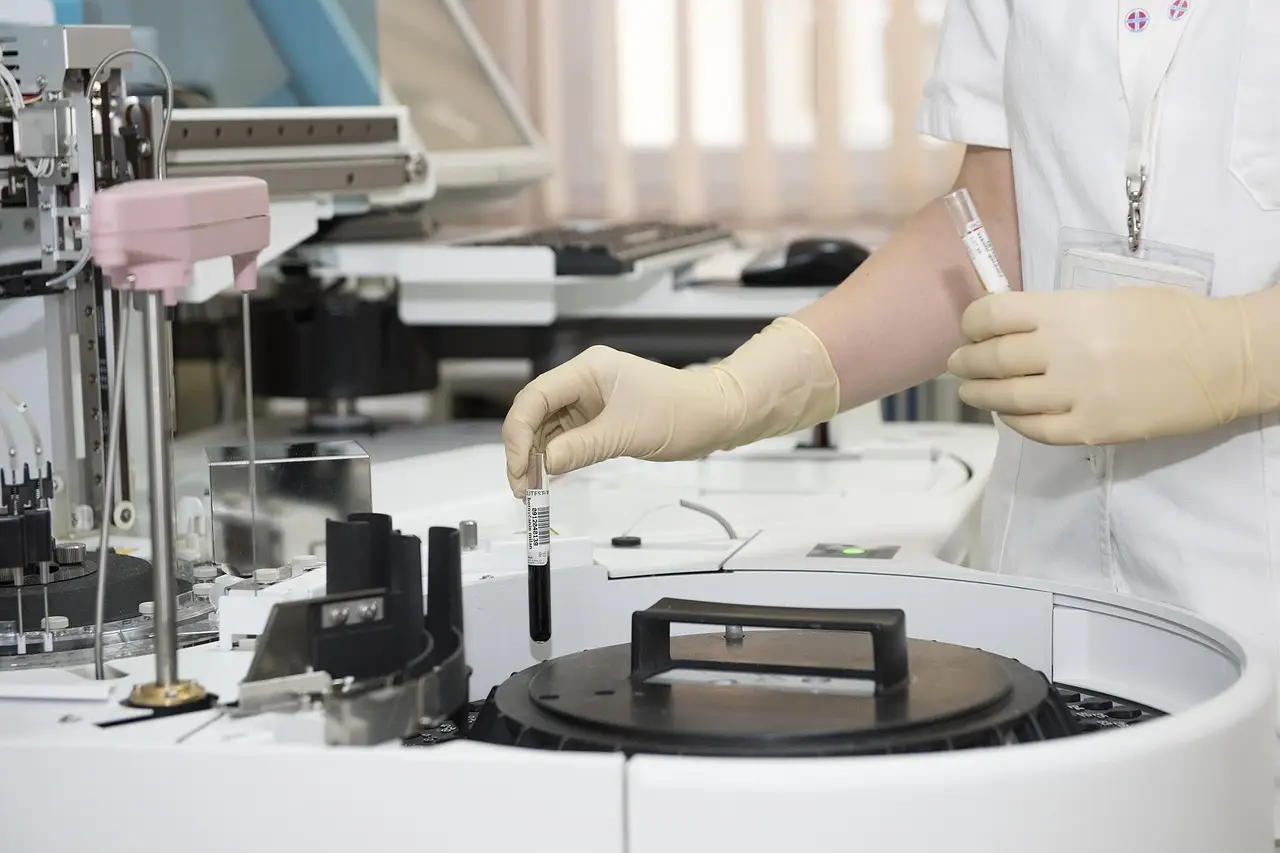
- A $69 subscription includes a basic blood panel measuring cholesterol, blood sugars, inflammation, vitamin D, and blood and organ health.
- Nine additional tests — covering hormones, micronutrients, and thyroid function, among others — cost $780 altogether.
- The reviewer opted for the routine panel plus a $29 "stress" test.
Blood draws run through Quest Diagnostics, one of two labs the company has partnered with. The company says it trained its AI on 1,200 longevity studies, actuarial data from life insurance companies, and life expectancy tables. Based on results, its algorithms generate a detailed prevention plan intended to extend remaining lifespan.
How does the app behave in practice?
After an initial health questionnaire, the app delivered its first verdict within a notification: three likely causes of death — cardiovascular disease, a sleep disorder, or cancer (type unspecified). It also informed the reviewer he had already "completed" more than half of his existence.
Then the model updated itself. Days later, after the reviewer noted a mild family history of diabetes, the app moved his predicted death from age 74 to 73. One data point, one year gone.
The app was effusive in its pitch. "You have two paths," a message from the app read. "We are here to help you achieve the longer one."
The gamification ran deep. In a single day, the reviewer added 5.8 years to his predicted lifespan by logging completed habits: at least 30 minutes of strength training, no alcohol, brushed and flossed teeth, consistent sleep, sauna time, and more than eight glasses of water. The reward for compliance was more projected life. The cost was a permanent countdown on his phone.
What did the blood panel reveal?
Results returned a week after the sample was drawn. The findings mostly matched what the reviewer's doctor had already warned him about earlier in the year: borderline high cholesterol and blood sugar levels "creeping toward prediabetic range." He also had "optimal liver health" and normal cortisol levels — contradicting wellness influencers who had convinced him his sleepless nights stemmed from high cortisol.
The algorithm, it turns out, is not always right, and neither is influencer wisdom.
The app then issued a stream of tasks: increase vitamin D3, schedule a DEXA scan for bone density, discuss a prostate-specific antigen screening with a specialist. Death Clock CEO Brent Franson says he wants the app to eventually replace primary care physicians. The app itself, meanwhile, kept nudging the reviewer to discuss his results with a doctor.
What does the CEO say he is selling?
Franson rejects the immortality framing common in the longevity space. "That's a fool errand," he told the reviewer, referring to attempts to cheat death. He said advocates like Johnson — whose mantra "Don't Die" reads more like a rejected Nike slogan than a wellness affirmation — "have to be really careful about inferring immortality when you have something to sell. That's a dangerous place to be. The reality is we're all going to die. It's a question of when."
Asked whether users are getting healthier or just more anxious about being unhealthy, Franson answered: "I think both. There's a very unhealthy obsession with self-optimization — tracking everything, trying to control everything." That self-description sits uneasily beside his own product, which monetizes exactly that obsession.
Why are statisticians skeptical?
Mike Ludkovski, a professor of statistics and applied probability at UC Santa Barbara whose research focuses on longevity analysis, says mortality awareness platforms like Death Clock "sell the illusion that individual lifespan is a linear process" that can be hacked. A 2024 study in the journal Aging Cell reached a related conclusion, suggesting an aging clock should not be treated as a measure of someone's overall biological age.
"Ultimately, individual-level triggers precipitating death are inherently random and will never be truly forecastable," Ludkovski says.
Death Clock does not operate alone. The broader field includes Doctronic, a HIPAA-compliant platform positioned as a personal AI doctor that refills prescriptions without a human physician; Superpower and Lifeforce, which offer membership-based health insights and clinician-reviewed recommendations; and Twin Health, which claims to build an AI replica of a person's metabolism. How these services extend life, and at what cost, remains unclear.
Can a countdown change behavior?
Gretchen Terry-Leonard, author of Your Second Prime: Does Aging Suck, or Do We Suck at Aging? and cofounder of the Center for Deeply Human Leadership, an independent research institute studying AI's effect on brain health, is skeptical that consumer longevity apps drive positive behavioral change on their own. "Facts don't change minds," she says.
Her critique cuts at the product's premise. There is a belief, she says, that measuring something means it can be managed. Death does not work that way, she argues, "so the measuring starts to serve a different need: the need to feel less afraid."
The research context matters here. Studies on how thoughts of death shape health choices find that people move toward healthier behavior when they also have the confidence and resources to act. "And without those," Terry-Leonard says, "the anxiety tends to go into protecting how we feel about ourselves rather than into our health." Her own research found that older adults with positive attitudes about aging lived an average of seven and a half years longer than those with negative outlooks. An app with a death countdown, she argues, "can quietly teach us that aging is loss" — hindering longevity rather than promoting it.
What happened after a month of use?
The reviewer's conclusion was personal and decisive. Tracking health data, he found, can only do so much. The app amplified his anxieties rather than assuaging them. Time, under the app's regime, became a burden he was forced to optimize, with the countdown ticking in a single, uniform direction.
He silenced Death Clock's notifications and texted a friend: "Let's meet at 7." His takeaway: life is less about adding time than about making it count — and about who you spend it with, not how you engineer it.
The test case suggests the real question for the $8 trillion longevity market is not whether AI can predict death dates, but whether a permanent countdown motivates health behavior or merely monetizes the fear of dying. On that question, the app's own CEO concedes the obsession is unhealthy. The notifications, for at least one user, are now off.
Original: ubs.com
More from Marcus Bennett
Show full bio
Senior reporter covering companies, deals and strategy in artificial intelligence and machine learning at AI In Context.
349 articles
Related articles
- MIT Technology Review Editors Answer: Could AI Actually Kill Us All?
- Tech Giants Promise AI Will Cure Cancer. Patients Are Still Waiting
- The AI Graveyard: Every Major AI Product That Shut Down or Stumbled
- OpenAI Launches ChatGPT Health, a Dedicated Health Data Experience
- AI Estimates Cancer Survival From a Single Patient Selfie