Novice scientists cut experiment time 83% with Danaher's AI lab assistant
Danaher and Microsoft are building an Azure-based agentic platform for lab instruments. Internal tests cut novice experiment time by up to 83%, while scientists retain review.
Why it matters
- Danaher and Microsoft announced their partnership on November 20, 2026.
- The platform uses Microsoft Azure and Microsoft Foundry for cloud infrastructure and AI agents.
- Initial commercial applications are expected in 2026, with more agent-enabled instruments planned for 2027.
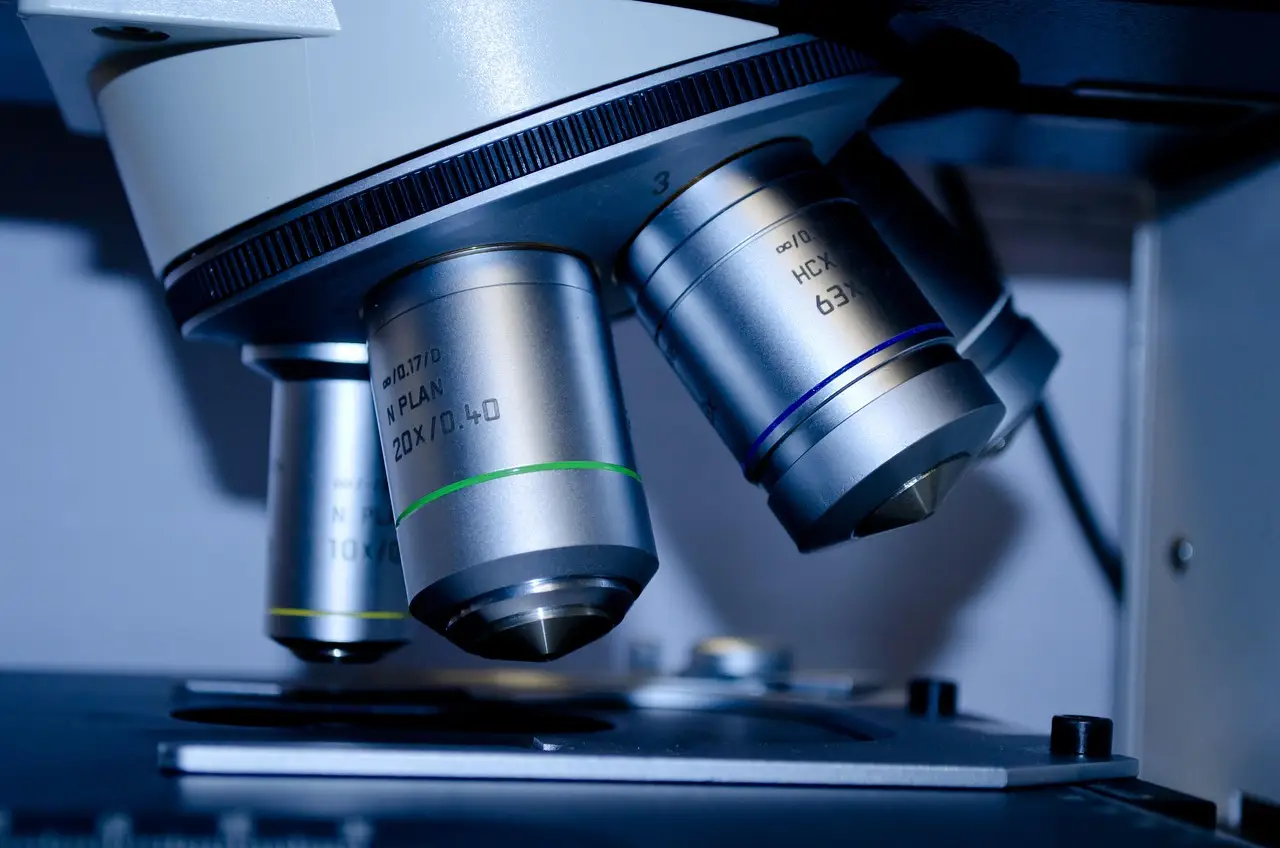
- In an internal Leica microscope test, assisted novices took up to 83% less time and used up to 68% fewer steps.
- Assisted novices produced high-quality data and completed the experiment in a time comparable to an expert's.
By Sophie Lindqvist
Danaher reported that novice scientists completing an AI-assisted experiment on a Leica microscope took up to 83% less time and used up to 68% fewer steps than a novice working without the assistant. Danaher described the figures as preliminary results from internal testing.
What is Danaher building with Microsoft?
Danaher announced its strategic partnership with Microsoft on November 20, 2026. The companies plan a shared agentic platform for scientific instrument control and insight generation, with initial commercial applications expected in 2026 and additional agent-enabled instruments planned for 2027.
Danaher said the platform is built on Microsoft Azure for secure, compliant cloud infrastructure. It uses Microsoft Foundry for AI agents that interpret results and guide instrument control, joining a common technical layer with Danaher’s specialized laboratory products.
Microsoft supplies the cloud infrastructure and agent tools, while Danaher supplies the instruments and laboratory context. Danaher calls the combination a common foundation rather than a single product, because it is meant to support specialized products and outside laboratory systems.
Danaher wants to reuse one AI foundation across its technologies while keeping the system open to multi-vendor laboratories. The company says this openness extends to agents and digital solutions, not only Danaher products.
For labs that combine suppliers, interoperability carries the practical weight. A common layer must coordinate instruments and software that were not assembled as one system, rather than merely standardizing behavior inside Danaher’s own portfolio.
Danaher expects the planned instrument rollout to test both goals: reuse within the company and interoperability outside it. The rollout will also show whether those designs preserve the safety boundaries and scientist review built into the system.
The bet is a common layer that works inside one company and across different vendors’ laboratory systems.
How would an AI agent control lab equipment?
One initial application is MetaXpress Acquire AI Assistant, Molecular Devices’ software for its high-content cellular imaging systems. Danaher designed the assistant to provide product support, and the companies are continuing to develop the wider platform.
This first application sits at the support end of a broader roadmap. The planned instruments extend AI assistance into experimental setup, execution and analysis rather than limiting it to troubleshooting or product questions.
Danaher says the planned workflow covers three connected jobs:
- Translate scientific intent into experimental plans, instrument setup and methods.
- Guide execution and troubleshooting while controlling hardware within defined safety boundaries and with user oversight.
- Interpret results, identify quality issues in real time, and recommend corrective actions and next experiments for scientist review.
Together, those functions would extend software assistance across the experimental cycle. In Danaher’s design, an agent could help move a scientist from a research goal to instrument instructions, monitor the run, assess its output and suggest what should happen next.
The architecture creates a loop from intent to execution, from output to quality assessment, and from assessment to a proposed next experiment. Danaher says context and learning can carry useful information into later work and analysis.
The oversight model changes with the stage. Danaher says instruments may operate hardware within set limits, while scientists assess recommended corrections and subsequent experiments before those steps proceed.
That split puts the agent inside the operating process without giving it unrestricted control. The system can act within defined boundaries and propose actions, but scientists remain the reviewers for changes to the experiment’s direction.
In practical terms, this is bounded automation with human review at the points that shape the experiment.
What did the internal test actually show?
Danaher reported that novice scientists conducting an AI-assisted experiment on a Leica microscope took up to 83% less time and used up to 68% fewer steps than a novice working without the assistant. Danaher presented the figures as preliminary internal-test results.
The assisted novices also produced high-quality data. They completed the experiment in a time comparable to an expert’s, and Danaher said the comparison with the expert covered completion time only.
The two comparisons support different claims. The 83% time reduction and 68% step reduction compare novices with and without the assistant. Danaher limited the comparison with the expert to completion time, even though the assisted novices produced high-quality data.
These results matter to Danaher’s wider argument that intelligent instruments can make experimental work more efficient while scientists stay in control. The company plans to use connected instruments to support increasingly autonomous workflows under scientific oversight, not replace that oversight.
The figures concern novice completion of one tested experiment, not lab-wide performance across instruments and suppliers. Danaher expects the initial commercial applications to extend the system beyond that internal test and reveal whether the same foundation holds up in real laboratory workflows.
The test supports a specific efficiency claim for novice work; it does not settle the broader case for autonomous laboratories.
Why does Danaher want connected instruments?
Danaher places the partnership within its broader AI and autonomous-science strategy. That strategy links intelligence at the instrument with data, laboratory workflows and physical experiment execution, with intelligent instruments serving as the first step.
Julie Sawyer Montgomery, Danaher’s president and CEO, said: “With Microsoft, we are building a common foundation, so our instruments and laboratories work together consistently, as one connected Danaher. Through context and learning, that foundation can continuously inform the next experiment and the best analysis.”
Her description gives the platform a broader role than task automation. Danaher wants experimental results to help determine the next action, then carry context from one step into the following experiment and analysis.
As instruments and laboratory systems become more connected and interoperable, Danaher expects those results to support increasingly connected and autonomous workflows. The company places scientific oversight throughout that process, rather than treating autonomy as permission for unattended experimentation.
The rollout will test whether one shared foundation can support reuse within Danaher and openness across multi-vendor laboratories. It must also preserve the safety boundaries and scientist review built into the design.
Commercial availability alone will not settle those questions. Danaher’s own rollout criteria require the foundation to balance internal reuse, outside interoperability, hardware limits and human review at the same time.
For laboratories combining multiple suppliers, the outcome will determine whether the “common foundation” remains practical outside Danaher’s own product family. For scientists, it will determine whether agents can shorten experiments without weakening review of quality problems, corrections and follow-up work.
The 2027 expansion will put that claim to a larger test, following initial commercial applications expected in 2026. If the foundation can connect instruments, interpret results and propose next steps while keeping scientists in control, Danaher and Microsoft will have moved AI from product support into the experimental process itself.
The next milestone is not a generic “more intelligent” instrument; it is a shared layer that proves it can scale across vendors without surrendering human review.
Source: unite.ai
More from Sophie Lindqvist
Show full bio
Staff writer covering regulation, policy and their impact on artificial intelligence and machine learning at AI In Context.
910 articles
Related articles
- Dell and Microsoft bring Foundry Local AI into the private cloud
- Microsoft expands Vera Rubin and Nemotron access beyond Azure
- Microsoft's Licensed Weights Lets Firms Custom-Train Its AI Models
- Baseten Lands Four Open Models in Microsoft Foundry as First-Party Preview
- AMD Ships Zen 6 EPYC Server Chips Built for AI Agent Workloads