Clairvoyance sees 90% to 95% of AI work moving local within 18 months
Clairvoyance AI has over 40,000 users and is preparing Hivemind, which pools idle GPUs. Brad Wardell expects 90% to 95% of AI work to run locally within 18 months.
Why it matters
- Brad Wardell forecasts 90% to 95% of AI work will run locally within 18 months.
- Clairvoyance AI has over 40,000 users, with retention dependent on generated session data.
- Hivemind will pool idle GPUs, including for workloads such as tracking tens of thousands of shipments.
- Stardock uses 8B to 12B parameter models, including on a Qualcomm Snapdragon X2 laptop.
- A nightly workload that cost about $100 per month in Claude tokens now runs free on locally owned hardware.
Brad Wardell expects 90% to 95% of AI work to run locally within 18 months, with roughly 5% of work requiring frontier models in the cloud.
As founder and CEO of Clairvoyance AI, Wardell is betting that routing work among laptops, local networks and cloud services will matter more than raw model size. The stakes are practical: enterprises can reuse idle hardware, reduce token spending and keep confidential workflows on machines they control, according to Wardell’s account.
Wardell also founded and has led Stardock for more than three decades, building desktop software and strategy games including Fences and Galactic Civilizations. He said Stardock’s game pipelines, creative assets and everyday business reporting shaped his interest in persistent agents that work directly with local files and applications.
Clairvoyance was incubated at Stardock. It operates as a workspace for named AI staff with persistent memory and ongoing assignments, connecting local files and development tools with cloud services and models running on a user’s hardware. Wardell said the system produces reusable notes, reports and other artifacts.
What problem inside Stardock prompted Clairvoyance AI?
The pressure point was Ara: History Untold, which Stardock helped Microsoft and Oxide Games finish. Wardell said writers delivered .DOCX files that teams painstakingly converted by hand into XML or CSV, while 3D assets had to be moved carefully into Stardock’s engine.
One balance change could touch a dozen files, and localization required matching translated strings to the correct keys in the correct files. Wardell said Clairvoyance removed that friction and allowed Stardock to ship on time.
By late 2025, Wardell said Stardock had debated whether to release Clairvoyance publicly. “It was a real competitive advantage, like having a superset of something like OpenClaw a year early,” he said. Wardell added that watching friends and colleagues lose jobs to AI automation pushed the company toward a public release.
Wardell called terminology the biggest tell of AI agent products built without consumer-software experience. He said users face a disadvantage when they do not know terms such as “glyph,” the small graphic on a button, because AI systems are trained on people who already understand the vocabulary.
Wardell said many AI teams are smart but young, a gap he believes shows in usability choices. He cited Anthropic’s ability to drag text between terminal sessions, which he said drew millions of views. Clairvoyance instead lets users @ agents by name to hand off work automatically.
The lesson Wardell drew from 30 years of shipping desktop software is blunt: teams must use their own product daily against real deadlines before outsiders see it. He said many AI products feel designed by people who never had to live inside the software.
Where should AI work run?
Routing, Wardell said, is becoming a company-level operating decision rather than an individual one. Clairvoyance is about to release Hivemind, which pools idle GPUs across a company’s own machines so any team member can run AI work on them.
Wardell said most enterprises already own capable machines that sit idle every night. He cited supply-chain teams tracking tens of thousands of shipments and auditors tracing company money as workloads that need adequate compute rather than a frontier cloud model.
Wardell said he runs dashboards, crash reports, sentiment reports and sales data every night on a local model. He said the same workload previously cost about $100 per month in tokens through Claude; it now runs free overnight on hardware he already owns.
Wardell reduced his routing rule to two tests: “The actual decision isn’t ‘local versus cloud,’ it’s ‘does this need to happen while someone is staring at the screen, and does the company already have the hardware to do it without paying per-token.’”
His framework puts operating cost and the need for immediate interaction into the same routing decision. For enterprise buyers, Hivemind changes the unit of AI infrastructure from a rented cloud endpoint to a shared pool of hardware the company already bought.
Can local models handle routine work?
Wardell said his team uses local AI to add metadata to files across terabytes of network data. Stardock develops both software and games, giving it decades of 3D and 2D art assets, videos and other work products to classify.
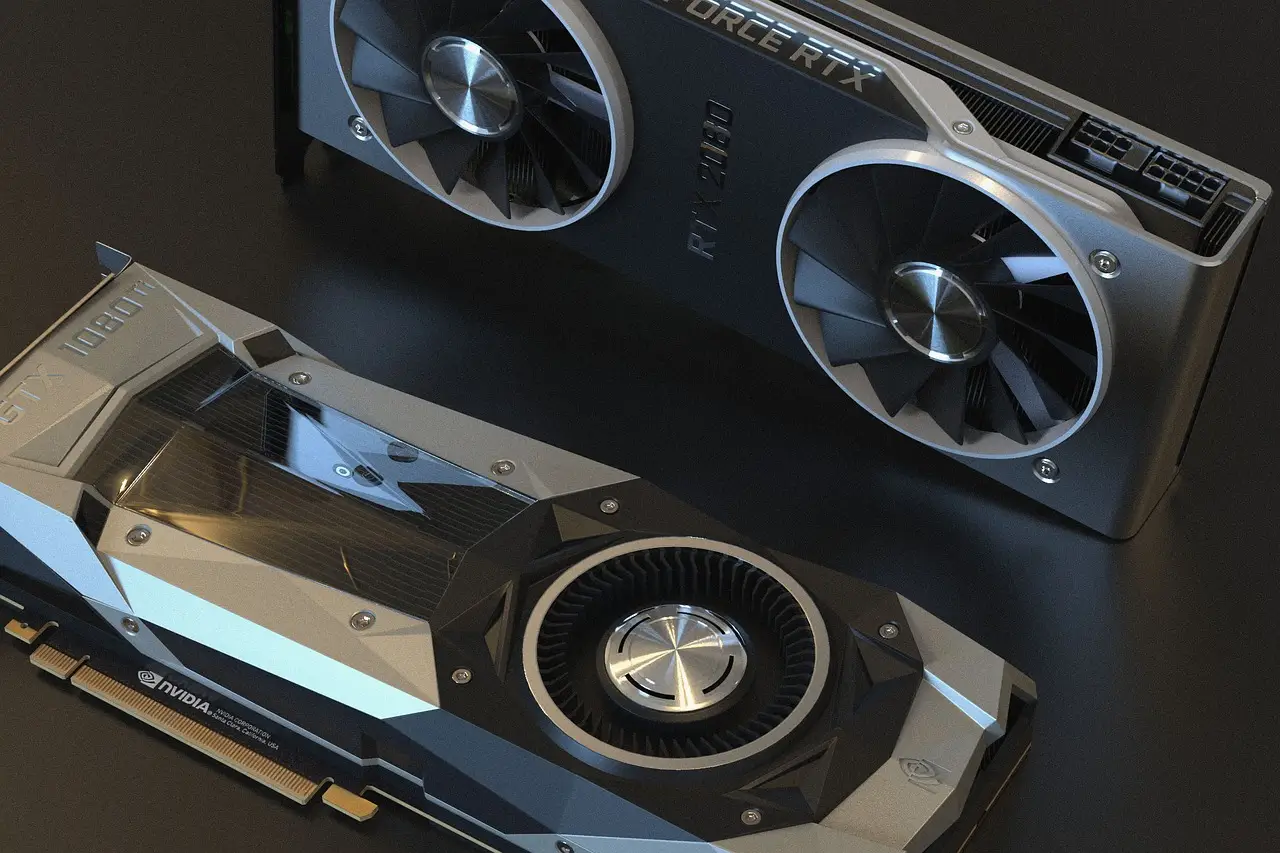
Wardell said Stardock’s AMD and NVIDIA graphics cards can run 8B to 12B parameter models, which he considers sufficient for every task the team currently handles. Those models can run on relatively old hardware, and a Qualcomm Snapdragon X2 laptop performs some background work in the evening.
The measurable result Wardell cited was retrieval: the system found 16 different 3D models of wolves within Stardock’s files. Wardell described local AI as well suited to slowly reviewing files and adding metadata, with search speed and asset discovery providing a practical measure of success.
Routing only works if a system knows when to escalate. Wardell said anything requiring open-ended judgment should probably move to the cloud, and argued that frontier models have largely solved hallucinations. In his experience, smaller local models bring hallucinations back, so his team keeps extensive guardrails around them.
For agents that can edit files and development tools, that threshold affects both operating cost and the risk of a consequential mistake. A local model that appears plausible may still require cloud-level review before it changes important assets.
How does Clairvoyance control memory and permissions?
Clairvoyance organizes agents as AI staff with persistent memory and ongoing assignments. Wardell said it stores memories in a graph structure (linked records whose updates can propagate), so an update to one item can recursively trigger updates to related nodes. He said the design keeps memories organized and current.
The harder problem, Wardell said, is preventing infinite recursion. He said the team needed extensive trial and error over the last couple of years to contain that behavior as memory updates spread through the graph.
Wardell said Clairvoyance’s File Protection feature can block agents from wiping out directories. Enforcement occurs at app level rather than through hooks that an agent could work around, according to Wardell.
Clairvoyance is local-first by design, Wardell said. Notes, projects and staff memory live on the user’s own machine, while a per-staff-member choice determines what reaches a cloud model. With a local-model route, nothing has to leave the hardware.
Wardell said enterprise customers are frustrated by having to upload entire confidential workflows to Anthropic or OpenAI. He separated that policy question from conventional cloud security: keeping other people out does not determine whether a model provider should hold company secrets in the first place.
What has 40,000 users revealed?
Clairvoyance has over 40,000 users, Wardell said, but retention depends heavily on how much data users generate through sessions. Wardell said most AI users have not crossed the threshold of taking generated data and building back onto it; most still think in terms of prompts.
Users who stay with Clairvoyance tend to generate large numbers of outputs called Exhibits and Reports. Wardell said those artifacts become the foundation for further work, making accumulated output more important than prompt volume alone to retention.
Wardell’s account makes accumulated work products, rather than conversational activity, the product’s core retention mechanism. It also places pressure on the product to preserve context accurately, because later assignments depend on earlier reports and notes.
What must improve over the next 18 months?
Asked what would expand reliable local agent work over the coming year, Wardell pointed to Hivemind-style pooled compute, letting underused GPUs serve an entire company domain. He said routing must become good enough that nobody needs to know whether a task uses a 4B model or Opus.
Wardell said almost nothing has been delegated to AI yet, even for trivial tasks such as screening resumes for location or checking shipment timing. A 4B model can already handle that work on a laptop, he said, while pooled compute could extend that capacity across a company.
His forecast assigns roughly 5% to frontier cloud work. Whether that share falls depends on routing accuracy, pooled hardware and the growth of tasks requiring open-ended judgment.
Wardell invited readers to try Clairvoyance as a desktop app for managing persistent AI agents across computers. Hivemind will test his central claim: whether companies can move routine AI work onto local and pooled hardware without surrendering control of their data or their choice of model.
Source: unite.ai
More from Marcus Bennett
Show full bio
Senior reporter covering companies, deals and strategy in artificial intelligence and machine learning at AI In Context.
872 articles
Related articles
- Inkling 2 Mini Runs Looping AI on Laptops, Testing Monitorability
- Ricursive Intelligence Bets AI-Designed Chips Can Solve Compute Crisis
- Meta's Muse Builds Dossiers on Everyone in Your Life
- Lucidity's AI Action Engine promises autonomous cloud cost cuts
- Cloudflare Brings OpenAI's GPT-5.4 to Agent Cloud for Enterprises