Camouflaged Data Centers: San Antonio Tests Whether Hiding AI's Footprint Helps
A San Antonio councilmember's district holds a dozen-plus data centers, heading toward 20. Can design and camouflage defuse community friction over AI's physical footprint?
Updated
Why it matters
- San Antonio Councilmember Ric Galvan's roughly 55-square-mile district contains more than a dozen data centers, expected to grow to around 20 if proposed projects are completed.
- Data centers in San Antonio have evolved since the 2000s from unassuming office-building-scale facilities into hyperscale sites spanning millions of square feet.
- The district's data centers are clustered along two main roads, concentrating nuisances such as traffic in the same neighborhoods.
San Antonio City Councilmember Ric Galvan remembers when data centers first arrived in his city in the 2000s. Back then, they looked like relatively unassuming office buildings. That has changed in recent years, as data centers have grown into massive "hyperscale" facilities spanning millions of square feet and housing the physical infrastructure for AI.
Galvan represents a district of roughly 55 square miles. It now contains more than a dozen data centers. If proposed projects are completed, he expects that number to grow to around 20 over the next few years.
The facilities are clustered along two main roads. That concentration matters. It stacks the nuisances of industrial-scale computing — traffic among them — onto the same neighborhoods, rather than spreading the burden across the city.
Why the physical footprint of AI is becoming a political problem
The story of AI is usually told in software terms: model releases, benchmark scores, funding rounds. But every token generated by a large language model traces back to a physical building full of servers, drawing power, generating heat, and occupying land. As AI workloads have scaled, so have the buildings that serve them — from the modest office-park structures Galvan remembers to hyperscale campuses measured in millions of square feet.
That growth puts local officials in a bind. Data centers bring investment and tax revenue. They also bring construction, truck traffic, noise from cooling systems, and sustained strain on the power grid. When a dozen of them cluster along two corridors in a single council district, the trade-offs stop being abstract.
Galvan's district illustrates the pattern at a human scale. Residents who lived near unassuming office buildings in the 2000s now live next to industrial facilities whose dimensions keep expanding. The question of whether a community accepts that change depends heavily on what the facilities look like, how they behave as neighbors, and who bears the costs.
Can design defuse the conflict?
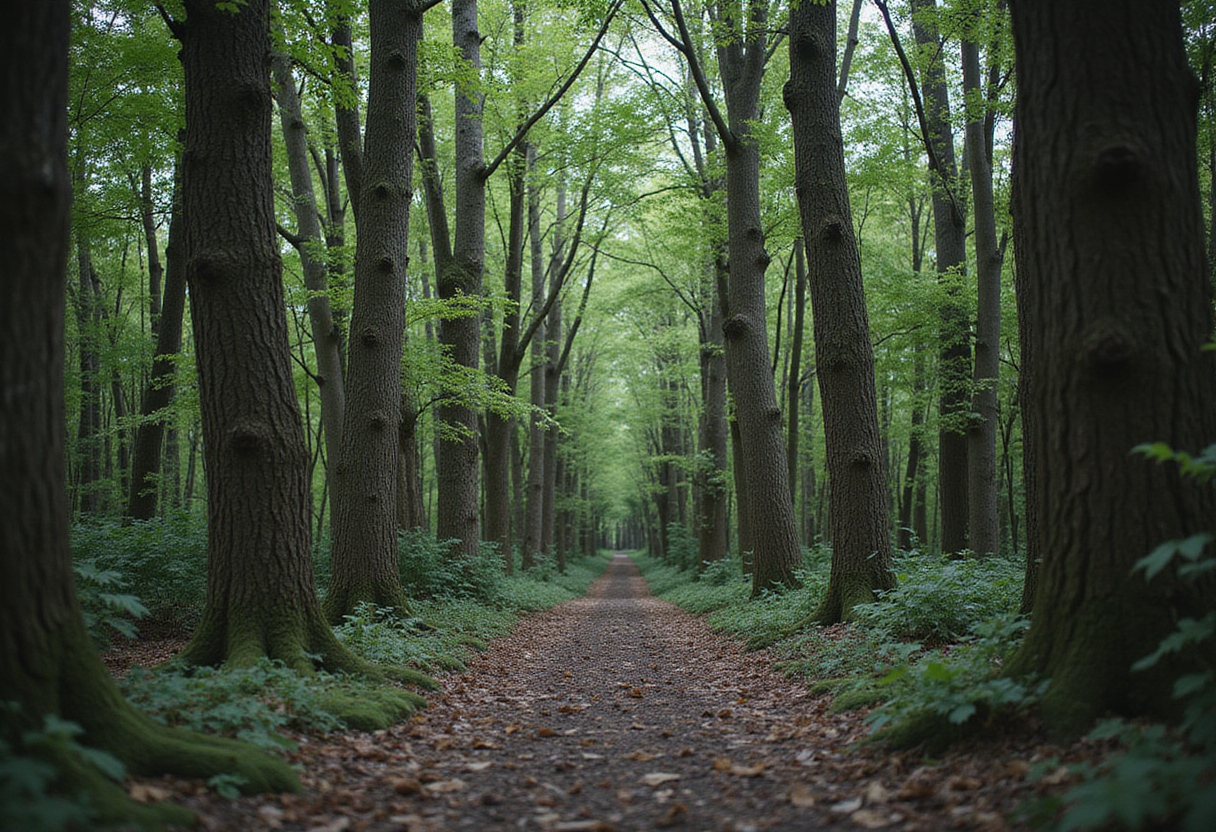
That question is the backdrop for a broader conversation about how data centers present themselves — literally — to the communities around them. The framing posed by the reporting is pointed: if a data center is camouflaged in the woods, will anyone hate it?
It is not a purely rhetorical question. Building design has become one of the levers available to operators and local governments negotiating the terms of data center expansion. A facility that reads as a corporate campus, or that disappears into greenery, may generate less resistance than one that reads as a warehouse district. Microsoft, whose data center buildout is among the largest in the industry, features in this conversation about biomimicry and environmental design — the question of whether AI's physical plants can be made to blend with, rather than dominate, their surroundings.
Design, however, only addresses part of the friction. Galvan's account of his district makes clear that the complaints are not primarily about architecture. They are about concentration: many facilities, clustered along two main roads, concentrating nuisances in the same neighborhoods. A green facade does not remove trucks from the road. It does not shrink a building that spans a footprint measured in acres.
The stakes for San Antonio and beyond
San Antonio is one of many American cities where data center construction has accelerated as AI demand has surged. The specifics of Galvan's district — the 55 square miles, the dozen-plus operating facilities, the projected growth toward roughly 20 — describe a transformation compressed into a short window. Facilities that once passed as office buildings now define entire corridors.
For local policymakers, the case raises the core question of industrial land use in the AI era: where these facilities go, how many cluster together, and what residents get in exchange. For the data center industry, it raises a reputational one. Companies building the physical substrate of AI need communities to accept, or at least tolerate, their continued expansion. Whether that acceptance can be earned through design choices — camouflage, landscaping, biomimicry — or requires more substantive concessions on traffic, siting, and community benefits, is now a live question.
Galvan's own trajectory captures the shift. He has watched his district go from hosting buildings that drew little attention to hosting infrastructure at the scale the AI economy demands. If the proposed projects in his district are completed, the roughly 20 data centers operating there will represent one of the denser concentrations of computing infrastructure in an American city — and a test of how much blending into the landscape can accomplish when the underlying growth does not slow down.
Original: news.microsoft.com
More from Sophie Lindqvist
Show full bio
Staff writer covering marketplaces and e-commerce at AI In Context.
163 articles
Related articles
- Startups Will Pay You to Rent Your Idle GPU for AI Inference
- OpenAI, Oracle and SoftBank Add Five Sites to Stargate Buildout
- OpenAI's Stargate Expands to Michigan, Passing 8GW of Planned Capacity
- Cerebras CEO Andrew Feldman to Tackle AI Scaling at TechCrunch Disrupt 2026
- OpenAI Tells White House AI Growth Hinges on Energy and Infrastructure