Bedrock Energy raises $24M to scale AI-guided geothermal drilling
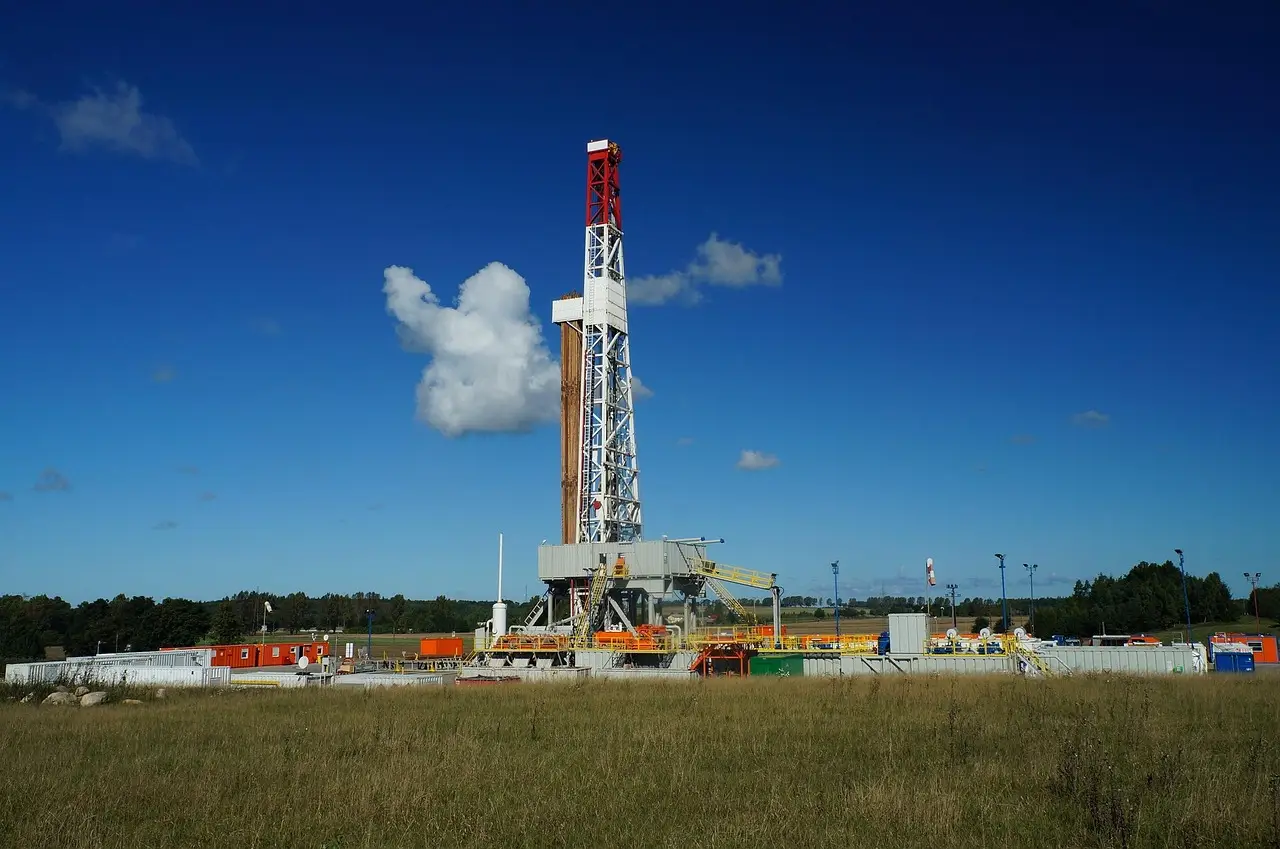
Bedrock Energy raised $24M to expand its fleet of AI-directed geothermal drill rigs, which it says cut drilling times by up to 80% for commercial buildings and data centers.
Why it matters
- Bedrock Energy raised a $24M round led by Clean Energy Ventures and Clearvision Ventures, after a $12M Series A in 2025 and an $8.5M seed in 2023.
- The startup says its AI-directed rigs cut geothermal drilling times by up to 80%.
- Bedrock operates in Utah, Colorado, New York, Alberta and Texas, and will expand into New England, New Jersey, the upper Midwest and more Western states.
- The company has drilled boreholes at nine sites and secured prepayments from new customers for drilling in the next one to two years.
- CEO Joselyn Lai cited a Michigan data center developer who said freeing a few megawatts could advance operations by up to a year.
Bedrock Energy has raised $24 million to build more AI-enabled geothermal drilling rigs, betting that software-directed drills can make ground-source heating and cooling cheap enough for a mass market. The Austin-based startup confirmed the round to TechCrunch and said the capital will fund new rigs and expansion from its current five-state footprint into new regions across the United States.
The number that anchors the company's pitch is 80%. Bedrock says its AI-directed rigs can slash drilling times by up to 80% compared with conventional practice. Drilling is the dominant cost barrier that has kept geothermal heat pumps out of nearly all American buildings, so a reduction of that size changes the economics of the category, not just one project.
Why geothermal heat pumps have stayed niche
The physics behind the technology is simple and old. Dig deep enough, and the temperature of the ground remains steady year round. Geothermal heat pumps exploit that stability: they use the ground as a heat source in winter and a heat sink in summer, moving heat between the building and the earth rather than generating it from scratch.
The machines themselves have been around for decades. What has limited them is cost. Just a fraction of all buildings in the U.S. use geothermal heat pumps, and the primary reason is that drilling into the earth is expensive. The expense scales with time, depth, and the number of boreholes a property needs, which is why the technology has remained a niche choice despite decades of proven operation.
That gap between proven performance and marginal deployment is the market opportunity Bedrock is chasing. Heating and cooling account for a large share of building energy use, and any method that cuts the installed cost of ground-source systems expands the addressable market site by site.
What does the AI actually do?
Bedrock's technical claim rests on a change in drilling method, not just faster execution. Most geothermal heat pump drillers use rigs that are similar to those used for water wells. Those machines work fine, but they are, in the company's characterization, crude instruments.
Bedrock instead uses directional drilling techniques borrowed from the oil and gas industry, and it guides those techniques with its own models of the subsurface. The combination allows the company to optimize drilling and borehole placement, Bedrock says, which helps ensure long-term system performance and longevity. Sensors placed in the boreholes feed data back into the models, refining them over time.
The drilling is shallow by energy-industry standards — down to roughly 1,000 feet or so — which places Bedrock in the "shallow geothermal" segment rather than the deep, high-temperature geothermal used for power generation. The company's modernized approach to that shallow drilling is what it says sets it apart from the water-well incumbents.
Bedrock has focused mostly on commercial properties to date. Large buildings benefit from deep, accurate boreholes because accuracy maximizes the use of their small footprints — a constraint that matters more on a packed commercial lot than on a suburban yard.
Where the money came from
Clean Energy Ventures and Clearvision Ventures led the $24 million round. A long list of investors participated:
- GVP Climate
- Susquehanna Sustainable Investments
- Catalytic Capital for Climate and Health by Temasek Trust
- MUUS
- Great Wave Ventures
- Autodesk Foundation
- Titanium Ventures
- Energy Impact Partners
- Wireframe Ventures
- Elemental Impact
- SFV Capital
The round follows a $12 million Series A in 2025 and an $8.5 million seed round in 2023, bringing Bedrock's total disclosed funding to roughly $44.5 million in three years.
Why data centers want geothermal's flat load profile
The most consequential commercial development in the story may be Bedrock's conversations with data center developers. Joselyn Lai, co-founder and CEO of Bedrock Energy, told TechCrunch the company has been in talks with that customer segment, and the interest goes beyond cooling.
Some developers might use geothermal loops to cool server racks. But others are interested in the technology's flat load profile. Because geothermal systems draw power steadily rather than in sharp peaks, deploying them on properties neighboring a data center can free up significant capacity on the local grid — capacity the data center can then claim for itself.
Lai described one such conversation in concrete terms: "We had someone in Michigan say, if we could free up a few megawatts, I think we might be able to operate that many months or even a year earlier. A year of revenue for a data center is very meaningful."
The quote captures the stakes. For a data center developer, grid interconnection and local capacity constraints can delay operations by months or years. A technology that softens a facility's electrical demand profile converts directly into earlier revenue, which is why the data center channel could grow faster than the company's core commercial-building business.
What happens once the systems are in the ground
Geothermal heat pumps also carry a maintenance advantage over conventional equipment. Once up and running, a system requires far less maintenance than traditional HVAC. Lai framed the value in financial terms: "You only have to install it once and then it works for a very long time, which is very good for infrastructure from a financial perspective."
That durability matters for the customer classes Bedrock targets. Commercial building owners and data center operators both amortize infrastructure over long horizons, and equipment that survives decades with minimal servicing shifts lifetime cost calculations in geothermal's favor.
Where Bedrock drills today and where it goes next
Bedrock currently operates in Utah, Colorado, New York, Alberta, and its home state of Texas. Lai said the new round will fund expansion into New England, New Jersey, the upper Midwest, and additional states in the West.
To serve those regions, the company will add more rigs to its fleet. Its operating record so far is early but concrete: it has drilled boreholes at nine sites, and it has secured payments from new customers in anticipation of drilling over the next year or two, Lai said.
Those prepayments are the metric to watch. Nine drilled sites represent a demonstration phase; customer payments committed against future drilling represent contracted demand. If the 80% drilling-time reduction holds at scale across colder markets like New England and the upper Midwest — regions where ground-source heating has the strongest economic case — Bedrock's rig count, not its pitch, will determine how fast the underutilized technology spreads.
Source: techcrunch.com
More from Rebecca Stone
Show full bio
Correspondent covering companies, deals and strategy in artificial intelligence and machine learning at AI In Context.
728 articles
Related articles
- Torus Raises $500M to Bring the Chips to Power, Not the Other Way Around
- Envision targets remote mines with AI-run wind, solar and hydrogen power
- Fervo's Geothermal Order Book Hits $11.9 Billion on AI Power Demand
- Turbine Shortage Turns Used Gas Plants Into AI Data Center Gold
- Anthropic Reported to Buy $3.4 Billion in Gas Turbines for AI Power