ASRock Industrial Ships RBK-100: A Robotics-in-a-Box for Physical AI
ASRock Industrial's RBK-100, announced November 24, 2026, bundles an Intel Core Ultra edge PC, RGB-D camera and twin 6-DOF arms with AiRoboStarter software for imitation-learning research.
Why it matters
- ASRock Industrial announced the RBK-100 Robotics-in-a-Box on November 24, 2026.
- The kit runs an Intel Core Ultra X7 Processor 358H with 32GB (standard) or 64GB (Advanced) DDR5-5600 memory and a 512GB PCIe Gen4 SSD.
- AiRoboStarter supports ACT and Pi0.5 model workflows, with SmolVLA planned for a future release.
- The product page labels specifications as preliminary and subject to change without notice.
- Intel's John Healy said scaling Physical AI 'requires an open technology foundation.'
ASRock Industrial announced the RBK-100 Robotics-in-a-Box on November 24, 2026 — an integrated Physical AI development platform that bundles an Intel-based edge computer, an RGB-D camera, paired robotic arms and pre-installed software into a single package for researchers, educators and developers.
The pitch is simple: cut the integration burden. Robotic AI development typically forces teams to assemble compute, sensors, actuators and a software stack from separate vendors before a single experiment can run. ASRock Industrial built the RBK-100 to collapse that work into one box, so users can spend their time on model experimentation and learned manipulation tasks rather than plumbing.
The company developed the platform in collaboration with Intel, and Intel's framing of the stakes goes to the heart of the current robotics debate. John Healy, vice president and general manager of Intel's Industrial and Robotics Division, said: "Scaling Physical AI requires more than powerful AI. It requires an open technology foundation that makes complex robotic systems easier to develop and deploy." That statement doubles as Intel's positioning in an edge-AI market where raw model capability has outpaced the tooling needed to put it into physical systems. The takeaway: the RBK-100's argument is about developer friction, not model power.
What's actually in the box?
The compute platform is the ASRock Industrial NUC BOX-358H, equipped with an Intel Core Ultra X7 Processor 358H for local AI processing. The standard configuration ships with 32GB of DDR5-5600 memory; the Advanced configuration doubles that to 64GB. Both listed versions include a 512GB M.2 2280 PCIe Gen4 solid-state drive.
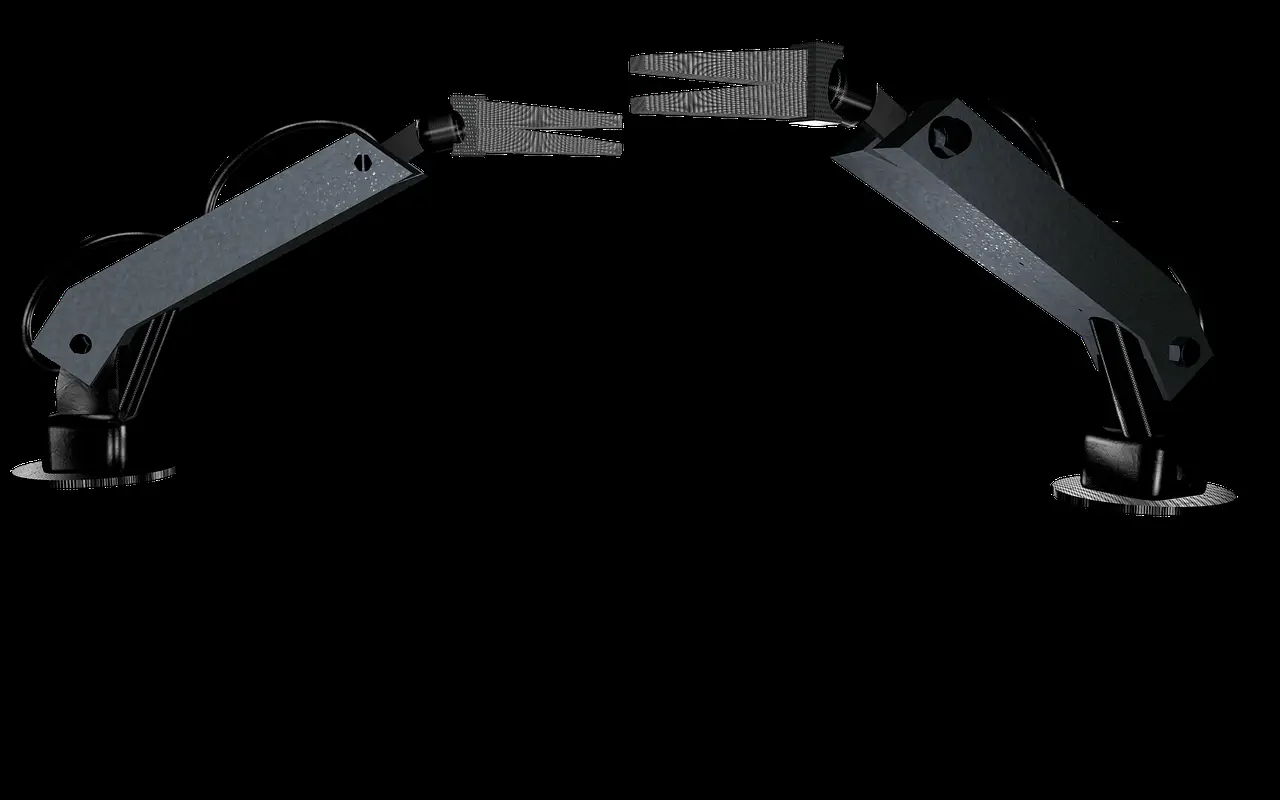
Perception comes from an RGB-D camera (a camera that captures color plus per-pixel depth, enabling spatial perception and object interaction). Manipulation comes from a six-degrees-of-freedom leader-and-follower robotic arm set — a teleoperation setup (a human guides one arm, the second arm mirrors the motion) that supports demonstration recording and experiments with pick-and-place, object handling and learned robotic skills.
The official product page rounds out the hardware list with:
- A four-port USB hub with auxiliary 5V power input
- Robot and camera mounting accessories
- Six play cubes for manipulation exercises
One caveat belongs in every paragraph about this spec sheet: ASRock labels the RBK-100 as preliminary and warns that specifications are subject to change without notice. The announced component list is not a frozen final configuration. Buyers comparing memory tiers or storage sizes should treat the current numbers as a snapshot, not a contract.
How does the development workflow run?
The kit's end-to-end pipeline runs from demonstration recording and dataset review through model training to robot-skill execution. That is the imitation-learning (training robots by showing them human examples) loop in miniature, and it is the core workflow the platform is built around.
Pre-installed AiRoboStarter provides the standard development environment, covering teleoperation, demonstration recording, data collection, dataset review, AI model training and robot-skill execution. ASRock Industrial lists two supported model workflows: ACT (Action Chunking Transformer, an imitation-learning architecture) and Pi0.5. Support for SmolVLA is planned for a future release — planned, not shipped, which is the operative word.
The standard package centers on learning manipulation skills from demonstrations. That scope is deliberately narrow, and honestly so: the arms, cubes and camera are built for tabletop manipulation research and teaching, not warehouse-scale autonomy. For university labs and education settings, that constraint is a feature; for production robotics teams, it is a boundary.
What does the Advanced tier add?
AiRoboStarter Advanced accompanies the 64GB configuration and adds an optional agentic AI workflow (a system where an AI agent chains reasoning, perception and tool use toward a goal). It connects voice interaction, AI reasoning, visual perception and trained robotic skills into one loop. The listed capabilities span:
- Speech-to-text and text-to-speech
- Large language models for reasoning
- Object detection for visual perception
- Web search and custom APIs
- Robot-skill integration
In practice, the Advanced tier lets a user speak a command, have a language model interpret it, have the vision system detect the relevant objects, and have the trained arm skills execute the resulting action. That moves the platform from pure imitation learning toward multimodal interaction — spoken commands and visual input joined to physical actions.
ASRock Industrial attaches its own caveat here, and it is a meaningful one: supported models, features and performance depend on the software release and validated configuration. In other words, the agentic layer's practical capability is a moving target tied to which stack the company has actually validated, not a fixed feature list. The gap between "listed capability" and "validated capability" is where most agentic-robotics demos disappoint.
Why does an integrated kit matter now?
Physical AI — AI systems that perceive and act in the physical world rather than only generating text or images — has become a serious research and investment frontier, and imitation learning has become its dominant training method for manipulation. But the barrier to entry has stayed high. A lab wanting to train a manipulation policy needs matched hardware, a synchronized data pipeline, a training stack and an execution runtime, each typically assembled separately.
The RBK-100's central contribution is that integrated path: physical demonstrations, model training and execution on the arm set, all in one package. For manipulation research and education, that removes the assembly tax that pricing rarely captures — the weeks of integration work that precede the first recorded demonstration.
Intel's involvement signals the compute side of the same bet. Edge processors that run AI locally, like the Core Ultra X7 358H here, matter to robotics because cloud round-trips add latency a physical control loop cannot tolerate. An open, local-first foundation is exactly what Healy's quote points toward, and the RBK-100 is one concrete instantiation of it.
What remains unproven?
Three things are unsaid or deferred. First, the preliminary specification label means the hardware could shift before general availability. Second, SmolVLA support exists only as a future plan. Third, the agentic Advanced workflow's real-world performance is explicitly tied to validated configurations, with no published benchmark numbers in the announcement.
None of that makes the kit a weak offering; it makes it an early one. The RBK-100's practical scope remains tied to the final hardware specification and the validated AiRoboStarter software configurations — and those are the two facts any buyer should verify before committing.
Source: unite.ai
More from James Calloway
Show full bio
News editor covering people, launches and day-to-day practice in artificial intelligence and machine learning at AI In Context.
902 articles
Related articles
- Rockwell Opens Automation Fair 2026 in Boston With 15,000 Expected
- Ambarella and Sigma Connectivity Join Forces to Factory-Ready Edge AI
- Nominal Triples Valuation to $3 Billion in Eight Months With $240M Series C
- Laplace Intelligence uses AI to crash-test robots before reality does
- NXP’s modular robotics platform targets faster drone development