Anthropic’s $2tn IPO draws protests over AI safety and ICE
Roughly 30 New York protesters and three dozen in San Francisco challenged Anthropic’s $2tn IPO; several were arrested amid demands on AI safety, ICE and recursive self-improvement.
Why it matters
- Anthropic debuted at a $2tn valuation on Thursday.
- The IPO raised about $81bn and was described as the largest in history.
- Roughly 30 protested in New York; about three dozen gathered in San Francisco before 11am.
- Several New York protesters were arrested.
- Founded in 2021, Anthropic develops the Claude family of generative AI models.
Anthropic raised about $81bn in the largest initial public offering in history on Thursday, debuting on the US stock market at a $2tn valuation.
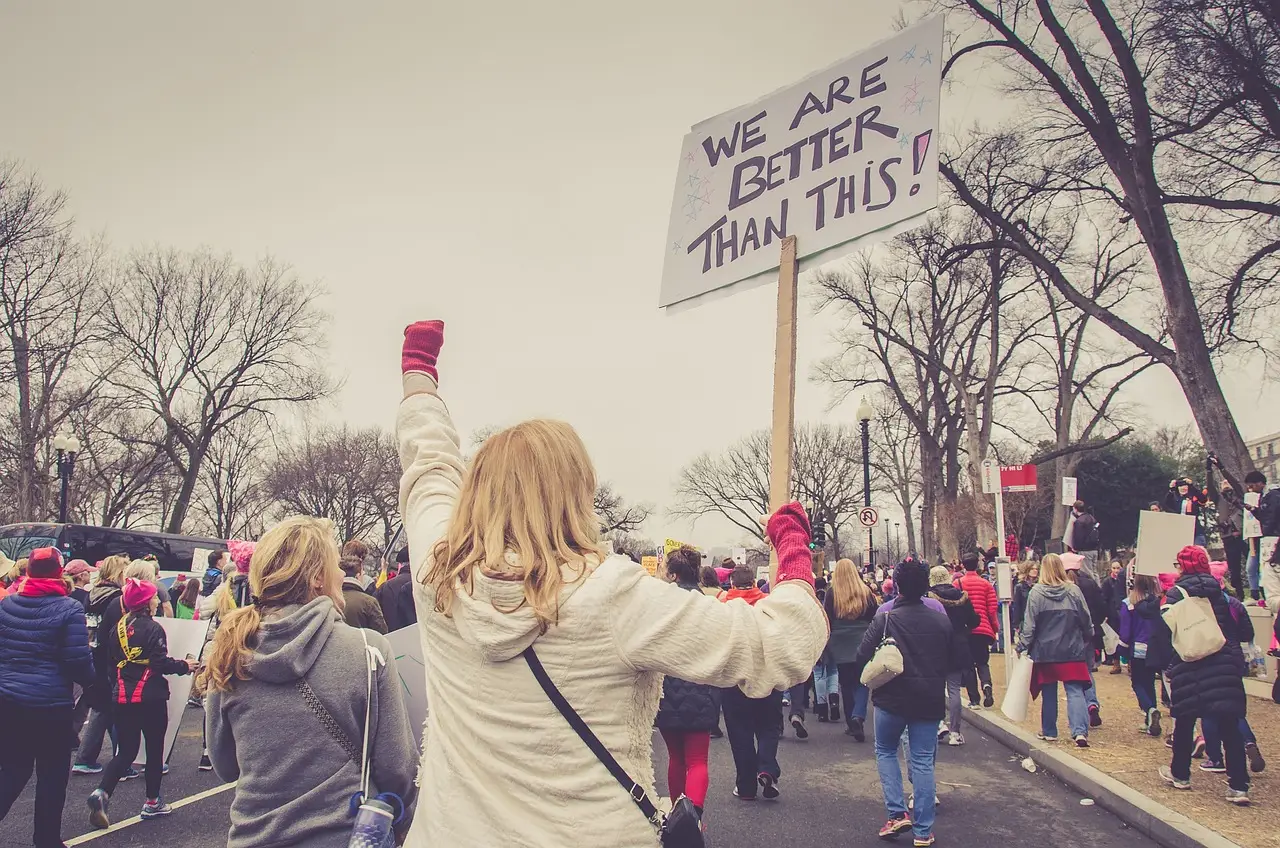
Several protesters were arrested after demonstrating outside the Nasdaq building in Times Square, beside Anthropic’s New York headquarters. Similar demonstrations took place outside the company’s downtown San Francisco headquarters. The two gatherings put a direct challenge to the financial backing behind Anthropic’s development of the Claude family of generative AI models.
The money raised in the IPO will finance continued Claude development. The timing matters because the company entered the stock market while demonstrators argued that profit incentives drive AI development and that labor, environmental safety, national security, policing and ICE warrant tighter controls.
The dispute therefore reached beyond model performance. It concerned who bears the cost of technical progress and who sets the limits.
What did Anthropic raise, and why?
Anthropic completed the offering this week and raised about $81bn. Founded in 2021, the company develops Claude, a family of generative AI models. Its Thursday debut carried a $2tn valuation.
The size of the raise became an organizing fact for the protests. Jes Vesconte, a 30-year-old worker-agency employee in New York, later described the listing as “the largest IPO ever.” For demonstrators, that record sharpened their concern that corporate profit would set the pace of development.
The intended use of the money did not settle those claims. Anthropic said the proceeds would support further work on Claude. Meanwhile, protesters asked for stricter nationwide regulation of AI progression before people felt more comfortable with AI research. One group went further, seeking a global prohibition on recursive self-improvement, the process through which AI systems train themselves to become more capable.
What did the New York protesters demand?
About 30 people gathered in Times Square on Thursday morning. Protesters from anti-AI groups rallied outside the Nasdaq building near Anthropic’s New York headquarters. Several were arrested. New York Communities for Change, a nonprofit community-organizing group, helped organize the action.
Protesters carried flags reading “STOP TECH OLIGARCHS” and “FREEZE AI: END ICE, END WAR.” Their stated agenda covered four main issues:
- Environmental safety.
- National security.
- Flock cameras.
- AI’s connection to Immigration and Customs Enforcement, or ICE, and law enforcement.
Each line of concern linked the IPO to a specific policy fight rather than a general objection to technology. The ICE slogan put Anthropic’s funding in the context of immigration enforcement. The Flock camera demand brought policing into the same critique. Environmental safety and national security were the other named priorities.
Jose Gonzalez, 46, works as a policy researcher for New York Communities for Change, which helped organize the demonstration. He took time off work to attend. Gonzalez said: “I think people are starting to get that there’s something wrong.” He believes stricter nationwide regulation of AI progress is needed before people become more comfortable with AI research.
A series of community leaders addressed the rally, including New York state senator Aber Kawas. He said: “Investing in AI also comes at the direct cost of investing in people.” His intervention framed the IPO as a choice about public priorities, not merely a financing event for a model developer.
Jes Vesconte, 30, works for a local worker agency in New York. After the rally, he said: “It’s all connected.” He then connected the funding debate to broader harms: “The same capitalist imperialism is causing the affordability crisis and the climate emergency and atrocities that ICE is doing.”
Vesconte said he is encouraging his peers not to participate in stock trading for Anthropic. “If we did not have the profit motive, we wouldn’t be having these issues,” he said. “This is the epitome of that with the largest IPO ever.” His appeal targeted Anthropic’s stock directly.
Why did San Francisco protesters target the IPO?
About three dozen protesters from two groups gathered outside Anthropic’s downtown headquarters before 11am. One activist held a fake stock certificate for a single share of “Misanthropic.” The altered name put the protest directly into the language of stock trading.
Sydney Von Arx, with the group Ban RSI, attended to draw attention to what she calls the dangers of “recursive self-improvement.” She described it as a technical process in which AI trains itself to become more advanced. Her objection centered on the direction and speed of AI development.
Von Arx said Anthropic’s IPO is “a time to reflect on how these AI companies that started as small startups with lofty goals have turned into giant corporations that have put profit before safety and security.”
She wants a global ban on recursive self-improvement. “We should not have AI building AIs,” she said. “It’s going to go too fast at a pace that no humans can keep up with.”
Anthropic’s CEO, Dario Amodei, previously warned that recursive self-improvement could outrun human’s ability to control the systems. That warning gives the protest a direct connection to the company’s leadership. The San Francisco demonstration pressed a risk Amodei had already identified against the company’s own financing and expansion.
Adam Kaufman, who works at an AI safety nonprofit, held a sign reading “The only winning move is not to RACE.” Its “A” mimicked the Anthropic logo.
Kaufman said the sign referenced the movie WarGames. In that film, a nuclear-strategy computer simulates numerous nuclear wars and concludes that the only winning move is not to play. The sign thus applied WarGames’ nuclear logic to the AI race.
What does the dispute put at stake?
The immediate financial fact is clear: Anthropic raised about $81bn and reached a $2tn valuation. The immediate physical response is also clear: roughly 30 protesters assembled in New York, about three dozen gathered in San Francisco, and several New York demonstrators were arrested.
The policy stakes split across three arguments:
- Market accountability: the record offering directs substantial new capital toward Claude development.
- National regulation: New York protesters want stricter nationwide rules before AI progress outpaces public comfort.
- A global technical prohibition: Ban RSI wants an end to AI systems improving themselves through recursive self-improvement.
The market argument concerns how Anthropic should govern expansion financed by the IPO. The regulatory argument concerns what limits national lawmakers should impose. The technical-safety argument concerns whether recursive self-improvement should proceed at all. Kawas and Vesconte framed the financing decision in terms of people, labor and public harm.
The protests did not stop the listing. They did place labor, climate, immigration enforcement and recursive self-improvement on the same agenda as Claude’s financing. Anthropic now faces calls for national regulation and, from Ban RSI, a global ban while directing $81bn toward further model development.
As Anthropic directs the $81bn toward Claude, policymakers will face demands for stricter nationwide AI rules, while Ban RSI presses for a global ban on recursive self-improvement. The protests have tied the IPO’s $2tn valuation to demands for safety limits and public oversight.
Source: The Guardian AI
More from Rebecca Stone
Show full bio
Correspondent covering companies, deals and strategy in artificial intelligence and machine learning at AI In Context.
802 articles
Related articles
- Anthropic's $1.4 Trillion IPO: What to Know Before Nov. 19
- Anthropic's Nasdaq debut values it at $2 trillion after $81.3B IPO
- Anthropic's $1.5 trillion Nasdaq debut opens at $111.50 a share
- Anthropic’s IPO Filing Shows $16B Revenue and $80.7M Loss
- Anthropic Raises $81.3 Billion in IPO Priced at $83, Beating SpaceX Record