AlphaFold Helps Reveal ApoB100, the Protein Behind Bad Cholesterol
University of Missouri researchers combined AlphaFold with cryo-EM to map apoB100, the protein scaffold of LDL, opening new paths to treat the world's deadliest disease.
Updated
Why it matters
- Researchers at the University of Missouri mapped the structure of apoB100, the protein scaffold of LDL ('bad cholesterol'), for the first time in roughly 50 years of attempts.
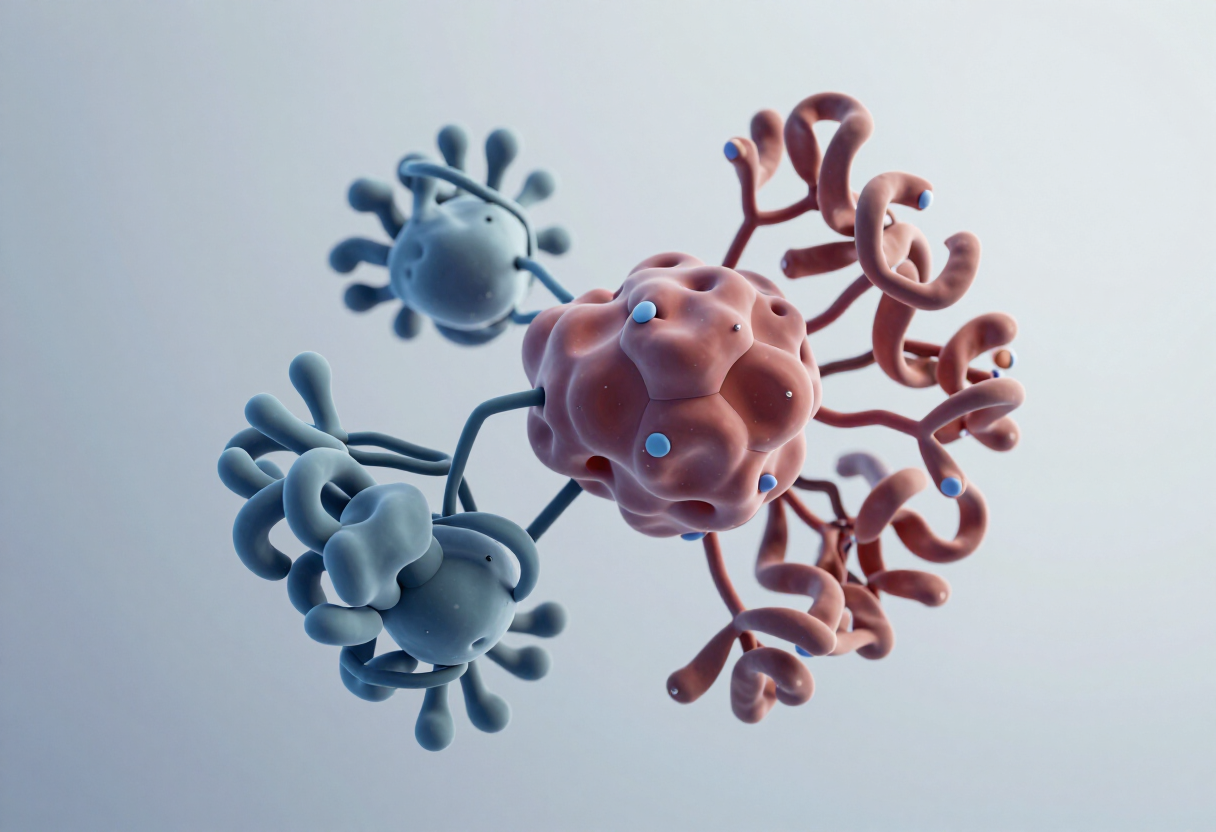
- The team combined cryo-electron microscopy images with AlphaFold-generated atomic-resolution predictions to solve the structure, which shows a cage-like shell with a ribbon-like belt around each LDL particle.
- ApoB100 is central to LDL, a key risk factor for atherosclerotic cardiovascular disease, the world's leading cause of death; the structure opens possibilities for more precise therapies targeting LDL.
Scientists have finally mapped the structure of apoB100, the enormous protein that gives "bad cholesterol" its form, using AlphaFold predictions combined with cryo-electron microscopy. The discovery, led by assistant professors Zachary Berndsen and Keith Cassidy at the University of Missouri (Mizzou), could transform how researchers and clinicians treat heart disease — the world's leading cause of death.
"For 50 years, people have wanted to see what this protein looked like," Berndsen says.
The problem has stubbornly resisted solution for two reasons. ApoB100 is enormous, at least by protein standards. It also binds to fats and other molecules in complicated ways. Those properties made atomic-level mapping impossible with the tools available to earlier generations of researchers.
The stakes are hard to overstate. ApoB100 forms the molecular scaffold of low-density lipoprotein (LDL), the molecule known popularly as "bad cholesterol." LDL is the major carrier of fat through the bloodstream and a key risk factor for atherosclerotic cardiovascular disease (ASCVD). ASCVD kills more people than any other condition on the planet. A structural map of apoB100 promised to show scientists how bad cholesterol becomes harmful inside the body, and with that knowledge, a better chance at developing ways to prevent and treat the disease.
For Berndsen and Cassidy, the work is also personal. Both have a family history of heart disease, a fact they describe as a reminder of what rides on their research.
The breakthrough came from combining two approaches. Berndsen, a biochemist, first used cryo-electron microscopy (cryo-EM) to capture images of LDL particles. The images were not sharp enough to resolve apoB100's structure at atomic precision. So Cassidy, a physicist, turned to AlphaFold. He used the AI system to generate atomic-resolution predictions of the protein's shape, then refined those predictions by comparing them against the cryo-EM data.
That pairing — experimental imaging plus AI-driven structure prediction — is what unlocked the result, according to Cassidy.
"AlphaFold played a profound role in this discovery, providing the raw material to interpret our experimental structure in a way that was frankly impossible before," Cassidy says.
The resulting model shows bad cholesterol's key protein in remarkable detail. ApoB100 forms a cage-like shell that wraps around each LDL particle. The structure includes a ribbon-like belt that keeps the particle intact as it travels through the bloodstream.
Knowing this shape opens new possibilities for preventing, diagnosing and treating high cholesterol and ASCVD. Therapies could now be designed to target LDL more precisely. The potential benefit to global health is considerable, given that ASCVD remains the deadliest disease worldwide.
The personal arc of the discovery runs long for Berndsen. ApoB100 was the first structure he ran through AlphaFold the week the system became available, and the first protein he wanted to examine with the lab's two-storey cryo-EM machine.
"Solving the structure of apoB100 was a dream come true," he says.
Clinical applications built on the structure will take time to develop. Even so, the mapping of apoB100 stands as a landmark achievement, and one of the clearest demonstrations yet of AlphaFold's role as a practical research instrument: an AI system generating the structural raw material that experimental methods alone could not supply. The next phase of work — turning a solved structure into targeted therapies for the world's deadliest disease — is where this 50-year-old problem finally meets its payoff.
Source: Google DeepMind Blog
More from Elena Vasquez
Show full bio
Market editor covering media and advertising at AI In Context.
122 articles