AI's power hunger is stressing the US grid — and funding its rebirth
Veir raised $110M for superconducting cables that carry power five times further in 20 times less space, as AI load growth forces US grid innovation.
Why it matters
- Veir raised $110 million in a Series C round earlier this month for superconducting power lines.
- Veir says its cables carry power five times further than traditional lines and need 20 times less space.
- Weavegrid, Veir and Rewiring America executives spoke at TechCrunch Disrupt earlier this month.
- AI-driven demand from data centers, EVs and heat pumps is stressing the aging US grid, risking higher bills and outages.
- Insiders argue the surge creates urgency to adopt previously shelved grid technologies.
Veir, a startup selling superconducting power lines, raised $110 million in a Series C round earlier this month — capital that exists, in large part, because AI data centers are straining the American electricity grid. The claim, made repeatedly by industry insiders at TechCrunch Disrupt earlier this month, is that the AI-driven surge in energy demand is not only a liability. It is also the strongest catalyst for grid modernization the United States has seen in decades.
That argument deserves scrutiny. The critics' case is concrete: the AI boom has produced a gargantuan surge in energy demand across the country, and this upswell in new connections is, in critics' telling, a stress test on America's aging grid infrastructure. The worries come in two horizons. In the short term, the energy crunch could push electrical bills higher for ordinary ratepayers. In the long term, it may eventually cause outages or other technical problems.
What the optimists add is that the same pressure is opening doors. Three insiders — Apoorv Bhargava, founder and CEO of Weavegrid; Tim Heidel, CEO of Veir; and Kristen Eberhard, VP of policy at Rewiring America — told the Disrupt audience that the grid faces new challenges and new opportunities simultaneously. That framing conveniently aligns with what each of their companies sells. It also happens to be quantifiable in at least one case.
What is actually changing on the grid?
Bhargava's diagnosis centers on complexity, not raw consumption. The system operators are juggling more variables than at any point in its history.
"It's a very different electric grid, right?" Bhargava said. "We're dealing with a ton of new variables, including renewable energy. We're dealing with a ton of new load in the form of electric vehicles and data centers and heat pumps, and the ability to manage and orchestrate is fundamentally what utilities are now grappling with."
Note what that quote describes: three distinct sources of new demand — EVs, data centers, heat pumps — layered onto intermittent renewable supply. Data centers are the AI-era variable, but they are not the only one. Any solution aimed only at AI load would miss the larger orchestration problem utilities face.
Weavegrid positions itself as the software answer. Bhargava said his company's software helps utilities orchestrate and manage load, maximizing the potential of the current system without waiting for new physical infrastructure. It can help organizations deploy energy efficiently while optimizing connections to reduce utility payers' bills, he said. The bill-reduction claim is the one residential customers will care about most — and it is the one the company supports here with the least detail.
Can superconducting cables carry the load?
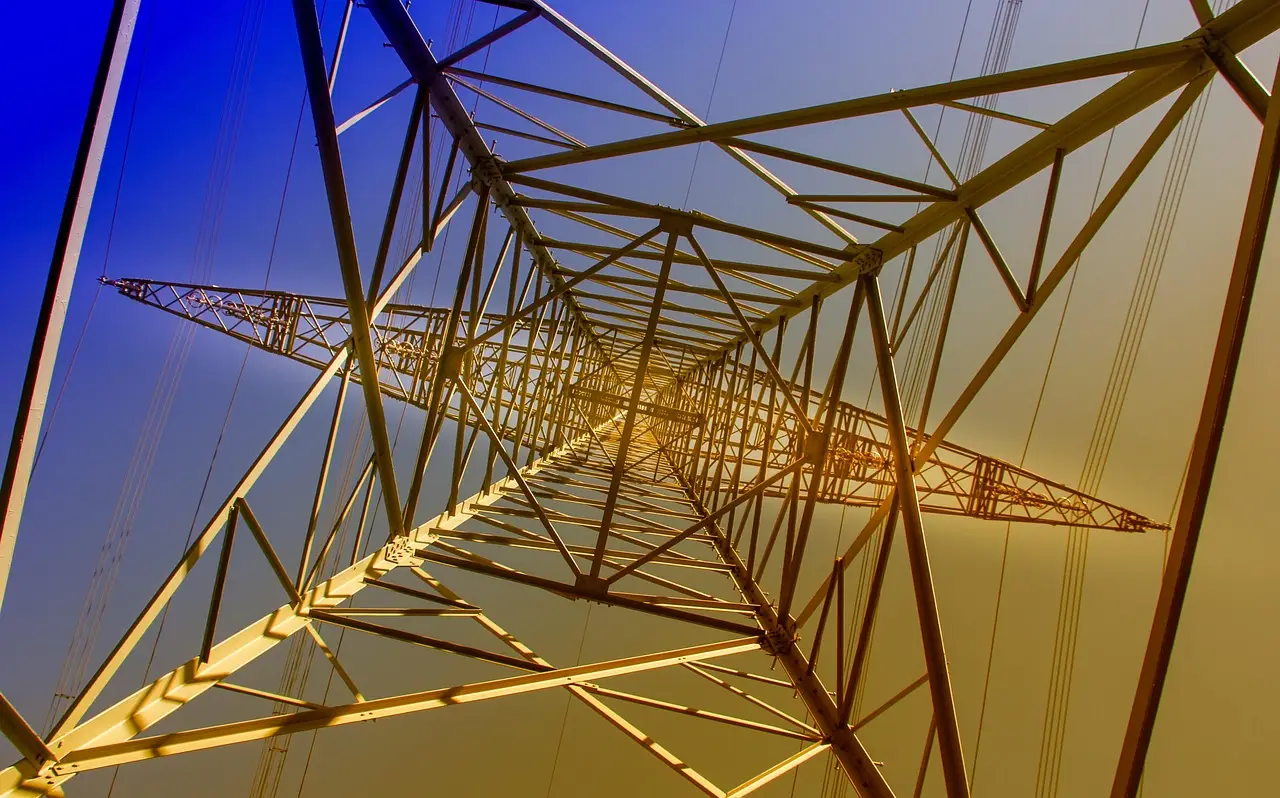
Heidel's company attacks the hardware side of the problem. Veir builds superconducting power lines — cables that, according to the company, transfer energy at a much more efficient rate than traditional lines. The specific claims are striking: Veir's cables can carry power five times further than traditional cables while requiring 20 times less space.
Those numbers are company claims, not independently verified benchmark results. But the Series C round of $110 million, closed earlier this month, signals that investors find them credible enough to fund. The space constraint matters as much as the distance figure: grid expansion in densely loaded regions often fails not on technology but on rights-of-way and permitting, and a cable needing a twentieth of the space changes that math.
Heidel argued the AI investment wave is pulling mature technologies off the shelf and into deployment.
"The scale of the investment in AI infrastructure is driving a tremendous amount of innovation," Heidel said. "There's a ton of new technologies that are coming off the shelves and starting to get to scale that, pulled together, can actually really make sure that data centers are the best community neighbors and citizens be right."
He added: "I think that we really need to look at ways that we can really adopt all of that as fast as possible to ease this next stage of growth."
The phrase "best community neighbors" is doing heavy lifting. Data centers face local opposition over noise, land use, and above all power draw; Heidel is asserting that a bundle of scaled technologies can neutralize those frictions. He did not offer a timeline, and none appears in the source. "As fast as possible" is an aspiration, not a schedule.
Why the policy side sees an opening
Eberhard's organization, Rewiring America, advocates for household electrification — a cause that competes with data centers for the same grid capacity. Her reading of the moment is less technological than cultural. The AI surge has created urgency around modernization, and urgency has made industries willing to experiment.
"I feel like this era of AI and load growth is a very improv era," Eberhard said. "There's a lot of yes-and-ing going on. So yes, we need more transmission lines. Yes, we need more centralized power plants, and we also need to make sure that we're taking advantage of all this other stuff that we had previously been leaving on the table when we didn't have this urgency of the AI demand."
The "improv era" framing concedes the critics' core demands — more transmission lines, more centralized power plants — before adding the distributed and efficiency tools her organization favors. It is a notable concession: even the most optimistic voice on the panel accepts that physical buildout is non-negotiable.
Her phrase "leaving on the table" points at the pre-AI status quo, in which flat demand gave utilities little reason to adopt demand management, flexible connections, or advanced hardware. That complacency, the panel implied, is now broken.
What remains unsaid
The panel's optimism has limits worth flagging. Nobody on stage offered figures for how much new capacity the US grid must add, or by when. Nobody quantified the risk of the near-term bill increases or long-term outages that critics cite — those harms were acknowledged but never sized. And all three speakers run organizations that profit, directly or through policy advantage, from the modernization spending they advocate.
There is also a gap between funding and delivery. Veir's $110 million Series C funds a company whose superconducting cables still face the distance between pilot deployments and grid-scale adoption. Weavegrid's orchestration software reduces strain but does not generate a single additional megawatt. Eberhard's "yes-and" coalition papered over the real tradeoffs between household electrification, data center growth, and ratepayer protection.
Still, the direction of the argument is clear and grounded: AI demand is functioning as an accelerant for technologies the grid has needed for years, from load orchestration software to high-capacity transmission hardware. The stakes extend beyond the AI industry itself — the same modernized grid must also absorb the electric vehicles and heat pumps that state climate policies are already pushing onto it.
The open question is sequencing. If superconducting lines, load management, and new generation arrive before the crunch peaks, data centers will have financed an upgrade every electricity customer inherits. If they arrive after, the short-term bill shocks and outage risks the critics predict will define the story instead.
Original: businesswire.com
More from James Calloway
Show full bio
News editor covering people, launches and day-to-day practice in artificial intelligence and machine learning at AI In Context.
369 articles
Related articles
- OpenAI Tells White House AI Growth Hinges on Energy and Infrastructure
- Cerebras CEO Andrew Feldman to Tackle AI Scaling at TechCrunch Disrupt 2026
- Data Centers Created a Blue-Collar Boom. Will Backlash End It?
- A Federal Job Guarantee Emerges as the Answer to AI Unemployment
- OpenAI, Oracle and SoftBank Add Five Sites to Stargate Buildout