42AI exits stealth with $62.5M seed and a model that predicts behavior
Israeli startup 42AI exits stealth with $62.5M in seed funding and a behavioral world model claiming 98% accuracy predicting trader flows at 10 brokerages.
Why it matters
- 42AI exited stealth with $62.5 million in seed funding from founders and Infinity Group.
- The company claims 98% accuracy predicting trading flows and an F1 score of 0.8–0.85 for direction and volume.
- 10 large brokerages already use the model; one reportedly gained about $30 million via dynamic hedging.
- Training datasets span almost 30 million people, including government and biobank data on over 2 million.
- The model was developed over three years with input from 2011 Nobel Chemistry laureate Dan Shechtman.
Israeli startup 42AI has come out of stealth with $62.5 million in seed funding and a claim that its "behavioral world model" can predict what individual people will do before they decide to do it — even in situations those people have never faced.
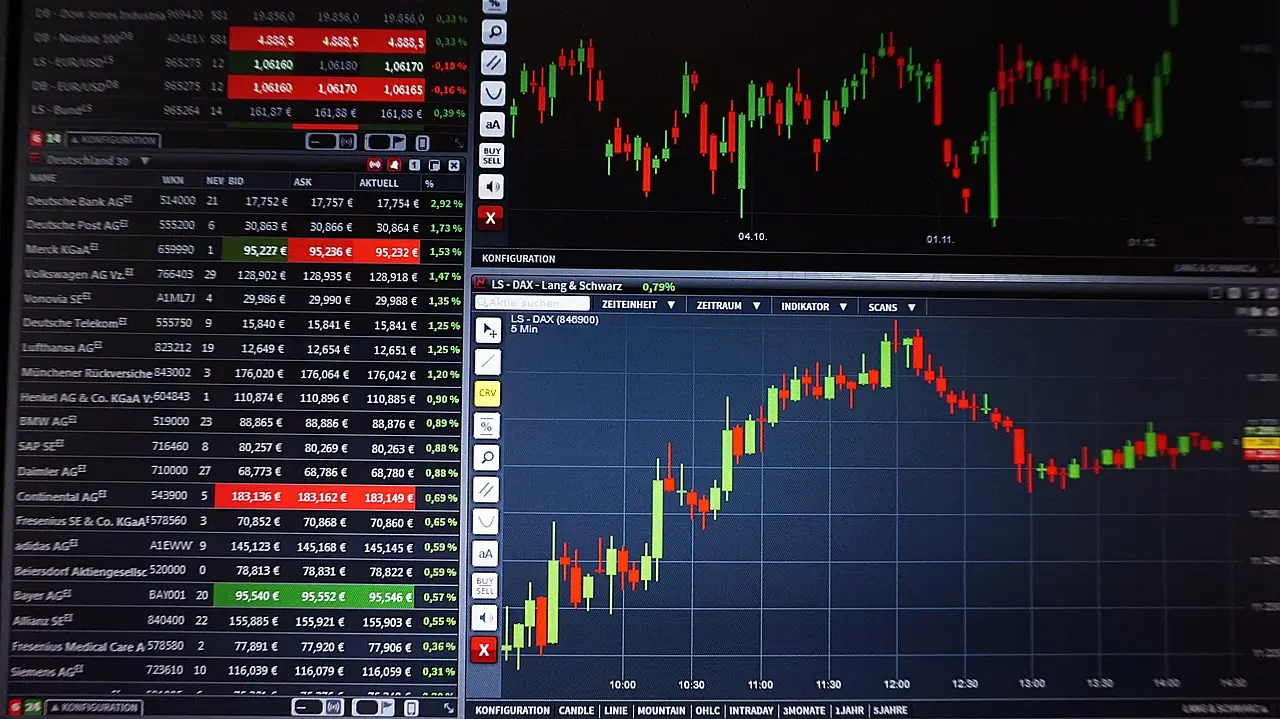
The company is already running the system at a handful of financial brokerages, where it says the model anticipates how individual traders will respond to volatile market conditions. Ten large brokerages now use it to manage liquidity, margin requirements and hedging exposure, according to CEO and co-founder Amit Gal-Or.
The company says it generates more than "seven figures" in revenue. Gal-Or declined to give a precise figure. He claimed one brokerage generated approximately $30 million in additional value through dynamic hedging built on the model's predictions.
What does the model actually predict?
Gal-Or did not shy from the scale of the claim. "Behavior is not deterministic; it's constantly probabilistic," he told TechCrunch. He argues that people carry underlying psychological tendencies that shape their decisions even when circumstances change, and that 42AI's model measures those tendencies and converts them into data a machine can process.
Co-founder and CTO Ehud Ezra put it in starker terms. "A week from now, you might be a different person, but your tendencies will always play out in certain areas to a probability or distribution," he said. The model, in his framing, outputs the probability that a given person makes a given decision.
That marks a departure from conventional behavioral analytics. Instead of extrapolating patterns from a person's past actions, 42AI says it tries to infer internal motivations. The method examines how people react to seemingly unrelated events. For a trader, those events include completing KYC processes, onboarding, support calls, money transfers and the trades themselves.
"When the person is talking to support or sales in the initial process […] we're looking at the sentiment, we're looking at the voice, we're looking at a lot of interactions that they're doing, how many times do they call, and so forth," Ezra said. "And all of those data points are going into the model. Later on, you have the interactions: how you buy and sell, and when, and we're looking at the market at that stage."
He added: "So we're trying to look at how they're looking at the world. In a world model, every individual is the world."
The company converts those observations into mathematical representations of traits, then feeds them into a transformer-based world model that lays out probabilities for possible decisions under different circumstances. A separate language model generates human-readable explanations for the predictions.
Training is structured around consistency, not just accuracy. Ezra said the model is rewarded for preserving a person's underlying tendencies during simulations. If someone is usually risk-averse and the simulation suddenly treats them as a risk-taker, "the target is off," he said.
How strong are the numbers?
42AI claims 98% accuracy in predicting market trades. Gal-Or clarified the figure: it measures whether aggregate trading flows fall within a predicted range, not whether each individual trade was called correctly.
The company also reports an F1 score of 0.8 to 0.85 for predicting trading direction and volume. F1 is a standard machine learning metric that balances correct predictions against false alarms and missed events.
The founders concede the model has limits. "There's a natural ceiling because you really don't have access to everything that a person experiences," Gal-Or said. Ezra said accuracy drops when the system misses important situational context — for example, when a trader changes strategy because of advice from a friend or colleague.
Where did the training data come from?
42AI spent three years developing the approach, drawing on psychological research, neuroscience and genetics, plus advice from experts in psychology and PTSD and from Dan Shechtman, who received the 2011 Nobel Prize in Chemistry.
Gal-Or said the team first studied thousands of people through psych assessments and behavioral scenarios. It then added government and biobank datasets covering more than 2 million people. Customer datasets have since expanded to cover almost 30 million people, he said.
In live deployments, the model analyzes customers' existing records, including transactions and support calls. Gal-Or said the system does not need personally identifiable information and argued that "the model never knows who the person is." The company still builds individual behavioral profiles from linked customer activity.
Who funded it, and who controls it?
The $62.5 million seed came from the founders and Infinity Group over three years, and was not raised entirely from external investors, Gal-Or said. Infinity was founded by his father, Amir Gal-Or, who serves as 42AI's chairman and co-founder. The company now plans to raise more money.
Customers pay either a flat fee or a percentage of the value the platform helps them capture.
The family connection and the closed customer list mean outside verification of the company's claims is not yet possible. The brokerage deployments are the company's own account.
Could brokers use this against their own customers?
The technology raises an obvious question: if a brokerage can anticipate what its customers will do, what stops it from using that knowledge to its own benefit against the very people being profiled?
Ezra called that "a valid concern" when TechCrunch raised it. The founders pointed to regulations, monitoring and an internal ethics committee. They did not explain what, if anything, would prevent customers from exploiting the technology for an advantage over the individuals it profiles.
Gal-Or framed the company as a guardrail rather than a risk. "We are very proud that actually we are part of the solution; we are the solution to this problem," he said.
What comes after finance?
42AI is exploring applications in gaming, fraud prevention and cybersecurity, and one day wants the model to help robots and AI agents understand people. That goal sits further out. Ezra acknowledged the model must be trained on rules and context for each new domain, which limits how quickly it can move beyond trading desks.
For now, the company's test is whether brokerages keep paying for probabilistic portraits of their own clients — and whether regulators, and the traders being modeled, accept that trade.
— Rebecca Stone
Original: 42ai.com
More from Rebecca Stone
Show full bio
Correspondent covering companies, deals and strategy in artificial intelligence and machine learning at AI In Context.
388 articles
Related articles
- Amazon's Jassy Bets $220 Billion on AWS Becoming a Trillion-Dollar Business
- Anthropic's S-1: $70B ARR, 85% Margins, and a Bet on AGI
- Amazon open-sources Strands Decider 2B as decision models multiply
- A Federal Job Guarantee Emerges as the Answer to AI Unemployment
- Andon Labs' AI Agents Run a Store, a Café, and a Radio DJ